
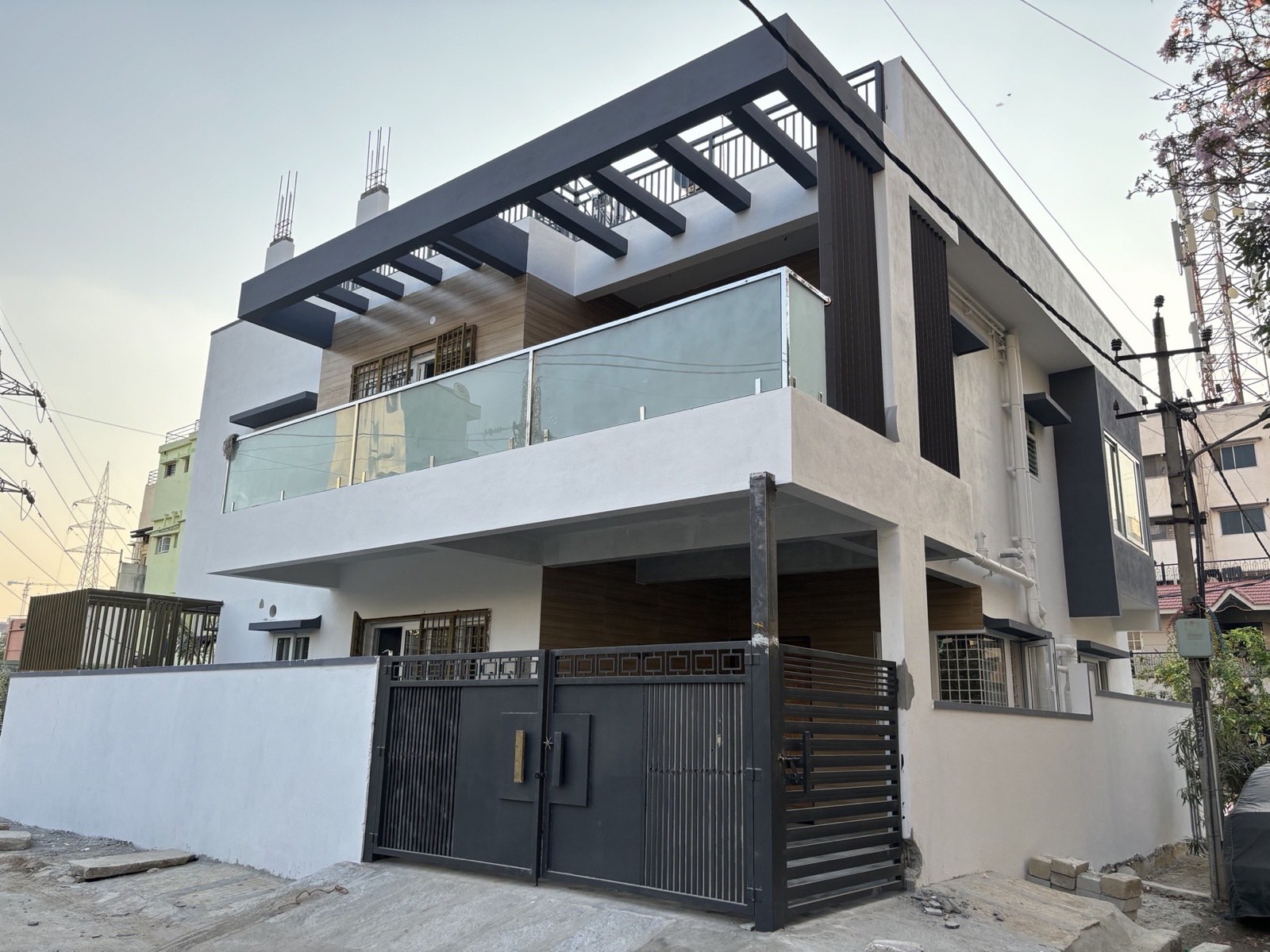
Before you start building in Bangalore, you have to decide how you are going to build.
There are two common ways to do it. You can hand the whole job to one company and get back a finished house. Or you can hire labour, buy your own materials, and run the project yourself.
Both work. People build good houses both ways. But they suit very different people, and choosing the wrong one is expensive.
This guide explains both honestly — including when a labour contract is the better choice.
The short version
- Turnkey means one company handles everything and quotes one fixed price per sq ft
- Labour contract means you buy materials and hire workers yourself
- Labour contracts look cheaper at the start, but budgets commonly rise 10 to 20 percent midway
- Turnkey suits you if you cannot supervise daily, or you live outside the city
- Labour contract suits you if you have building experience and time to be on site
- The real question is not which is cheaper. It is who carries the risk
What is turnkey project construction?
Turnkey project construction means one company handles the whole job — drawings, approvals, materials, workers, building and handover. You agree a price and a date. You get back a finished house.
The name comes from the idea that you simply turn the key and move in.
In a turnkey contract, the builder gives you one rate per square foot of built-up area. That rate is based on an agreed material list — the exact brands and quality of everything that goes into the house. Once agreed, that rate covers all the work until the house is finished.
What a turnkey builder handles:
- Architectural and structural drawings
- BBMP approval paperwork and liaisoning
- Buying and delivering all materials
- Hiring and managing all labour
- Day-to-day site supervision
- Quality checks at each stage
- Handover of a finished house
What you do: approve the design, approve the specification, make payments at agreed stages, and visit whenever you want.
What is a labour contract?
In a labour contract, you hire only the workers. You buy every material yourself — cement, steel, sand, bricks, tiles, wiring, fittings, everything.
What you handle:
- Finding and coordinating an architect and structural engineer
- Getting BBMP approval yourself through the online building plan approval system
- Ordering every material at the right time, in the right quantity
- Checking deliveries and storing materials safely
- Paying labour, usually weekly
- Supervising the site daily to check quality and progress
- Sorting out problems between different trades
What the contractor does: supplies workers and gets the work done.
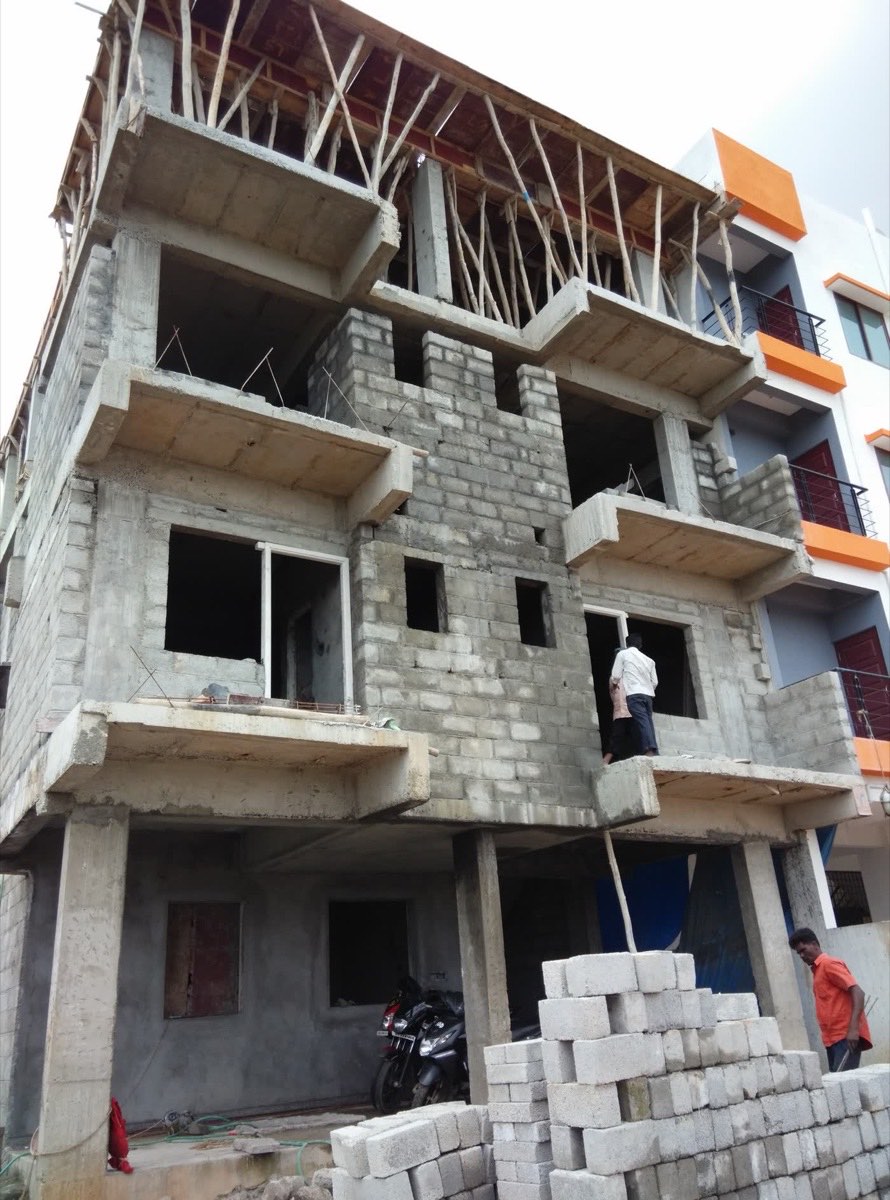
This is real work. Expect to be on site most days for eight to twelve months.
The honest comparison
| Turnkey | Labour contract | |
|---|---|---|
| Who buys materials | Builder | You |
| Who supervises daily | Builder | You |
| Price certainty | Fixed price agreed upfront | Varies with market rates |
| Your time needed | Low | High — near daily |
| Control over materials | Through agreed specification | Complete |
| Who carries the risk | Builder | You |
| Changing your mind mid-build | Harder, needs a written change | Easier |
| Suits you if | You are busy or live away | You have experience and time |
Which one actually costs less?
This is the question everyone asks, and the honest answer is: it depends on you.
A labour contract looks cheaper on paper. You are not paying a builder’s margin on materials. If you buy well, supervise tightly and make no mistakes, you can build for less.
But that “if” is doing a lot of work.
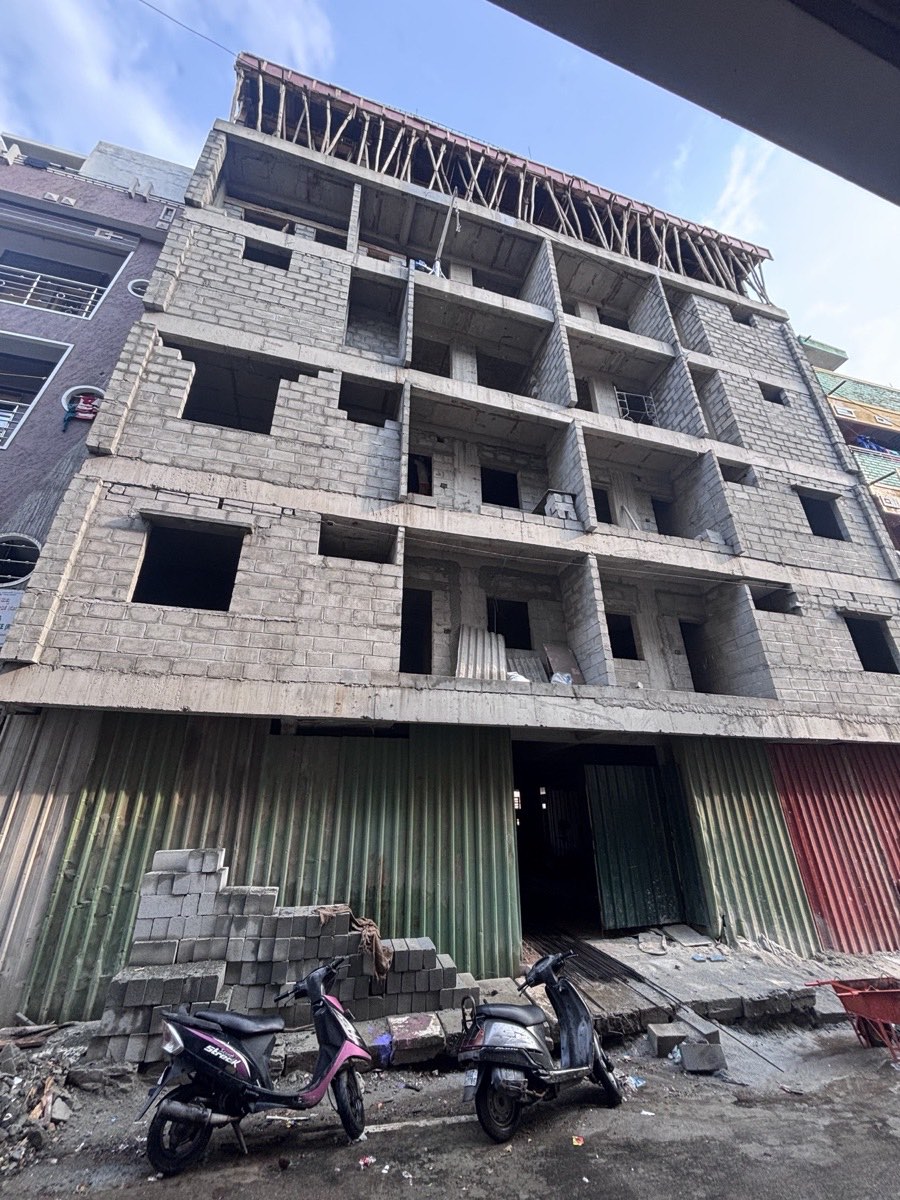
Where labour contract budgets tend to grow:
Material prices move constantly, and they vary by supplier, by area and even by season — festival demand is real. The wholesale price index published by the Office of the Economic Adviser tracks how cement, steel and other building materials move month to month. You are buying at shop rates, once. A builder buying for several sites at a time gets better prices than you can.
Wastage costs money. Over-ordering cement that goes hard, steel cut wrong, tiles broken in handling. A builder doing this every week wastes less than someone doing it once.
Rework is the big one. Some South Indian turnkey builders report that labour contract budgets commonly rise 10 to 20 percent midway through construction, largely through structural changes and rework. Treat that figure with some caution — it comes from companies who sell turnkey services. But the underlying point stands: changes made after work starts cost far more than changes made on paper.
Delays cost money too. When you are coordinating separate vendors, approvals and trades yourself, gaps open up. Every extra month is another month of costs.
Where turnkey costs more:
The builder’s margin is in the rate. You are paying for someone to run the whole job, buy better, supervise daily, and carry the risk if something goes wrong.
A fair summary: a labour contract can cost less if you are experienced and available. For most first-time builders, the savings get eaten by wastage, rework and delays. Turnkey costs a bit more upfront and much less in stress.
Choose turnkey if…
- You cannot be on site most days. A job, a business, or young children make daily supervision impossible for most people.
- You live outside Bangalore, or abroad. This is the single strongest case for turnkey. Managing material purchases and daily labour from another city or country is very hard.
- You are building for the first time. The mistakes you do not know to avoid are the expensive ones.
- You need a fixed budget. If you have a loan or a firm ceiling, price certainty matters more than the chance of saving a little.
- You want one person responsible. When something goes wrong, you call one number. You are not stuck in the middle of an argument between four different vendors.
Choose a labour contract if…
We are a turnkey builder, so take this section as our honest view rather than a sales pitch. A labour contract is genuinely the better choice for some people.
- You have built before, or you work in construction or a related trade.
- You can be on site daily for eight to twelve months without it damaging your work or health.
- You have trusted suppliers already — a cement dealer, a steel supplier, a tile shop where you get real rates.
- You want total control over every material, down to the brand of each fitting.
- You genuinely enjoy the process. Some people do. If that is you, a labour contract can be rewarding as well as cheaper.
If three or more of these describe you, a labour contract may well save you money. If none do, it probably will not.
The NRI and out-of-town owner problem
Many Bangalore plot owners live in another city or another country, often planning to build now and move back later.
If that is you, a labour contract is very difficult. You cannot check whether the right grade of cement was delivered. You cannot see whether curing was done properly. You cannot tell whether the work stopped for two weeks.
Some people manage it by asking a family member here to supervise. But be honest about what that means. You are handing that person eight to twelve months of near-daily work.
If you do not have that, turnkey is the practical choice. Ask for weekly photo and video updates. Ask for a report at every stage. And pick a builder who is used to working with owners who live far away.
What must be in a turnkey agreement
Turnkey only protects you if the agreement is detailed. A one-page quote with a single number is not a turnkey contract.
Insist on all of these in writing:
- Built-up area in square feet, and which measurement it is — carpet, built-up or super built-up.
- Rate per square foot, and the total price.
- A full material list. Brand and grade of cement, steel, blocks, tiles, wiring, switches, bathroom fittings, doors, windows and paint. Not “standard quality” — actual brand names, with the relevant BIS standard grade where one applies, such as the grade of cement and steel.
- A clear list of what is included and what is not. Compound wall, sump, water tank, gate and BBMP fees are usually not in the rate.
- A payment schedule tied to stages, not to dates. Pay on completion of foundation, slab, brickwork, plastering and so on.
- A timeline with a handover date.
- How changes are handled. If you change a specification mid-project, how is the new cost worked out? Agree this before you start.
- Defect liability period. In plain words: how long after you move in will the builder come back and fix problems for free? Ask how long, and what is covered. Worth knowing: the five-year structural defect cover under RERA applies to registered real estate projects, not to a house you build on your own plot. On a private build, the only defect liability you have is the one written into your contract — so get it in writing.
Point 7 matters more than people think. The one weak spot in a fixed-price contract is that changing your mind later is awkward. If you agree beforehand how changes will be priced, most of that problem goes away.
Red flags in any construction quote
- A single lump sum with no breakdown
- ”Standard quality materials” with no brand names given
- No mention of which area measurement is being used
- Payment demanded by date rather than by work completed
- A rate far below everyone else — usually a thinner specification, not better value
- Reluctance to put the specification in writing
- No defect liability period
Our approach
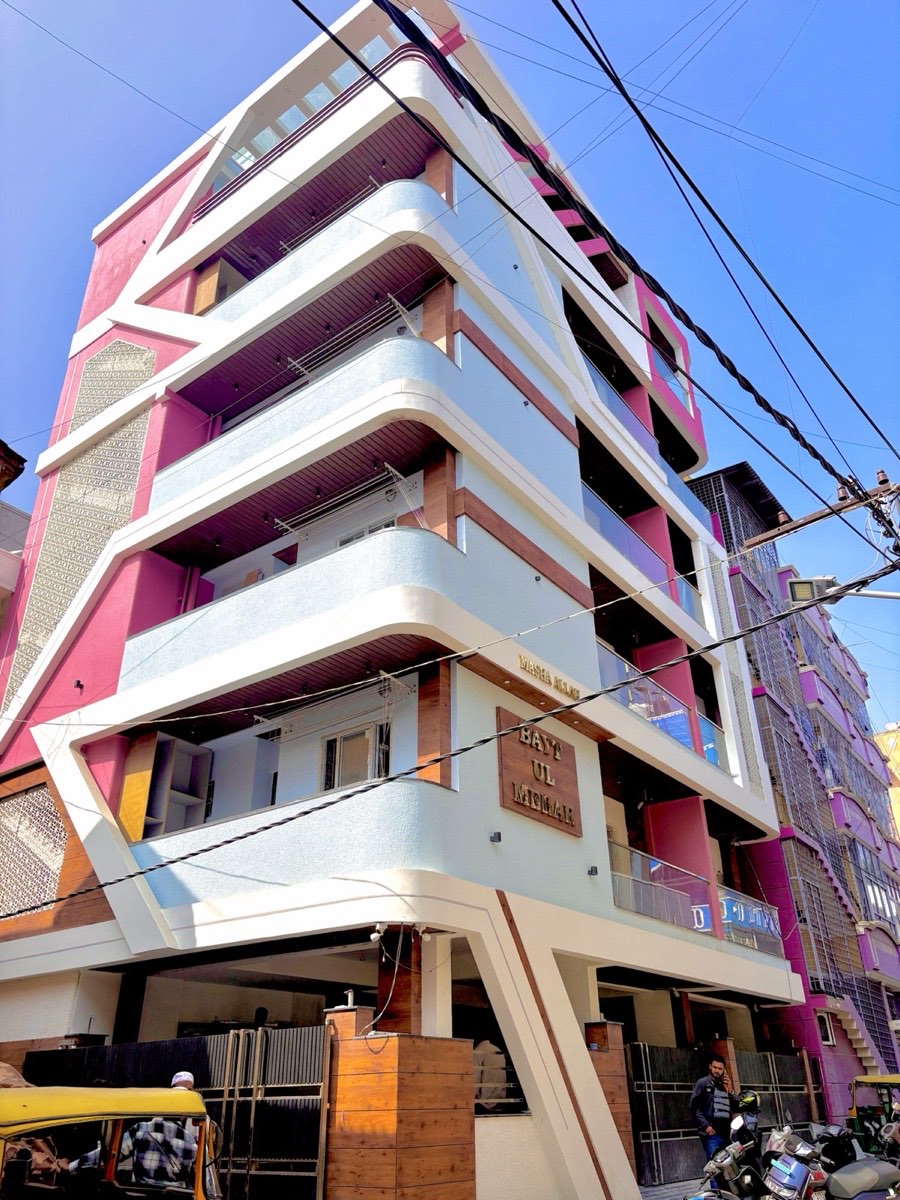
We work on a turnkey model with published fixed rates — currently ₹1,999 per sq ft for our Economy package and ₹2,199 per sq ft for Premium, on built-up area.
We publish these rates openly because the most common complaint about construction in Bangalore is not price. It is not knowing the price.
Both packages build the same house to the same structural standard. The only difference is the quality of materials, fittings and finishing.
Want a rough figure for your own plot? Try our cost estimator. For detailed numbers, read our guides on 30x40 construction cost and 3 BHK construction cost.
Frequently asked questions
What does turnkey project construction mean?
One company handles the whole job — drawings, approvals, materials, workers, building and handover — for an agreed price and date. You get a finished house ready to move into.
Is turnkey construction more expensive than a labour contract?
Turnkey usually has a higher quoted price because the builder’s margin and coordination are included. But labour contract budgets commonly rise 10 to 20 percent during construction through wastage, rework and delays. For most first-time builders the final difference is small, and turnkey carries far less risk.
What is the difference between turnkey and a labour contract?
In turnkey, the builder buys all materials and manages everything. In a labour contract, you buy every material and supervise the site yourself, and the contractor supplies only workers.
Can I choose my own materials in a turnkey project?
Yes. You choose them when the material list is agreed, before work starts. That is the time to make your choices. You can still change things later, but it needs a written change to the contract.
Is turnkey good for NRIs?
It is usually the only practical option for someone living outside the city, since a labour contract needs near-daily site supervision. Ask for weekly photo and video updates and stage-wise progress reporting.
How much of a house cost is labour?
Estimates vary by source and by finish level, commonly between 25 and 40 percent of the total. Materials make up most of the rest.
What should I check before signing a turnkey contract?
Check eight things: the built-up area and which measurement it uses, the rate per sq ft, a full material list with brand names, a written list of what is not included, a payment plan tied to stages, a completion date, how changes will be priced, and how long the builder fixes problems after handover.
Talk to us
If you are still deciding between the two, we are happy to talk it through — including telling you honestly if we think a labour contract suits your situation better.
Wasat Constructions is an ISO 9001:2015 certified construction company in Frazer Town, Bangalore. We build homes, commercial buildings and joint development projects across the city.
Call 888-488-4747 or book a free consultation.